
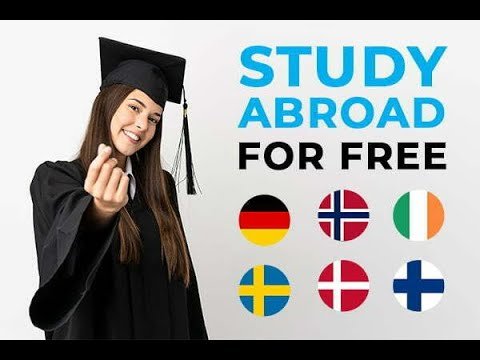
Why Study Abroad Without Tuition Is a Game-Changer
Studying abroad is a dream for many students. Yet for most, the cost of tuition becomes the biggest roadblock. In countries like the United States, Canada, or the UK, yearly undergraduate tuition fees can exceed $25,000–$40,000, not counting housing, books, and meals.
Now, imagine studying in a country where tuition is zero or less than the price of a Netflix subscription. These countries are not myths—they exist, and many welcome international students warmly.
What’s even better? You can often combine free tuition with scholarships for living expenses, allowing you to focus fully on your degree, personal growth, and global networking.
This guide explores the Top 10 countries offering free undergraduate education for foreigners, giving you practical insights on costs, languages, and application strategies.
Germany – Where Quality Meets Accessibility
Germany has become the poster child of tuition-free higher education. In 2014, all 16 federal states abolished undergraduate tuition fees, extending the opportunity even to international students.
Why Germany Attracts Foreign Students
- Top Universities: Ludwig Maximilian University of Munich (LMU) and Heidelberg University consistently rank in the world’s top 100.
- STEM Powerhouse: German degrees in engineering, IT, and natural sciences are globally respected.
- Language Flexibility: While German is the main teaching language, many bachelor’s programs in English are available.
Application Tip
Apply early, as admission processes are competitive. Learn German if possible—it opens more tuition-free program doors.
Norway – Study for Free in the Land of Fjords
Norway offers a unique deal: all public universities are tuition-free, regardless of nationality. Students only pay a semester fee of $30–$60.
🔑 What Makes Norway Stand Out
- English Programs: Many bachelor’s programs in social sciences and natural sciences are taught in English.
- Inclusive Society: Students enjoy world-class facilities and access to research hubs.
- Safety & Lifestyle: Ranked among the safest and happiest countries.
Reality Check
Living expenses are high—about $1,200–$2,000 per month. But you can offset costs by working part-time.
Austria – Affordable, Artistic, and Academic
Austria combines low tuition fees with rich cultural heritage. International students pay around $800 per semester at public universities.
Advantages
- Music & Arts: Home to Vienna, Salzburg, and top conservatories.
- Affordable Living: Cheaper than Switzerland or Germany.
- Central Europe: Perfect hub to travel across Europe during breaks.
💡 Student Strategy
Enroll in German-taught courses for the best tuition rates. For English-taught programs, fees may increase but remain lower than in the UK.
Czech Republic – Free If You Master the Language
In the Czech Republic, undergraduate education is completely free if you study in Czech.
🔑 Benefits
- Beautiful Cities: Prague and Brno offer a mix of medieval charm and modern campuses.
- Affordable Costs: Living expenses average $500–$800/month.
- Scholarships: Czech government scholarships support international students.
⚠️ The Catch
Free education applies only to Czech-language courses. English-taught programs cost around $4,000–$8,000 annually.
Argentina – Latin America’s Free Education Pioneer
Argentina has been offering free education in state universities since 1949. Foreign students benefit from this progressive policy.
🔑 What’s Special
- Cultural Immersion: Buenos Aires is known as the “Paris of South America.”
- Strong Social Sciences Programs: Especially in economics, literature, and history.
- No Tuition: Even prestigious schools like the University of Buenos Aires charge no tuition.
💡 Tip
Knowing Spanish is essential. Most undergraduate programs are not taught in English.
Brazil – Free Tuition in Federal Universities
Brazil’s federal universities provide tuition-free education to both domestic and international students.
🔑 Perks
- World-Class Institutions: University of São Paulo and University of Campinas are highly ranked.
- Research Focus: Opportunities in agriculture, engineering, and health sciences.
- Vibrant Culture: From Carnival to football, student life is colorful.
⚠️ Note
Courses are in Portuguese. Many international students take a year of language classes before starting.
Greece – Ancient Knowledge Meets Modern Access
Greece, birthplace of philosophy and democracy, offers tuition-free undergraduate education in public institutions.
🔑 Strengths
- Historic Value: Study archaeology, history, or philosophy surrounded by real ancient ruins.
- EU Quality Standards: Greek degrees are recognized across Europe.
- Low Living Costs: Cheaper than Western Europe.
💡 For International Students
Many English-taught bachelor’s programs exist in medicine, IT, and humanities.
Finland & 🇸🇪 Sweden – Nordic Excellence
Though policies have evolved, Finland and Sweden remain attractive.
🔑 Finland
- Free for EU/EEA students; non-EU students pay fees, but scholarships often cover tuition.
- Innovative teaching with a strong focus on technology and sustainability.
🔑 Sweden
- Similar policy to Finland: EU/EEA students study free.
- For non-EU students, scholarships from Swedish universities and government make degrees almost free.
⚠️ Consideration
Non-EU students must apply for scholarships to cover tuition, but both countries offer generous aid.
Iceland – Education With a Nordic Twist
Iceland offers no tuition fees at public universities, though small registration fees apply.
🔑 Highlights
- Research Potential: Unique opportunities in geothermal energy, environmental sciences, and marine biology.
- English Courses: Many bachelor’s and master’s programs available in English.
- Welcoming Community: Small but student-friendly nation.
⚠️ Reality
The cost of living is high—students should budget carefully.
Mauritius – Africa’s Rising Education Hub
Since 2019, Mauritius has abolished tuition fees in its public universities, making it a rare African country with free higher education.
🔑 Benefits
- English and French Friendly: Language isn’t a big barrier.
- Growing International Appeal: Attracts African and Asian students.
- Affordable Living: Housing and food costs are far below Europe.
💡 Bonus
Mauritius is also positioning itself as an innovation hub, particularly in IT and renewable energy.
Quick Comparison Table
| Country | Tuition Policy for Internationals | Language Needed | Avg. Monthly Living Cost |
|---|---|---|---|
| Germany | Free (semester fee only) | German/English | $800–$1,200 |
| Norway | Free (union fee only) | English/Norwegian | $1,200–$2,000 |
| Austria | ~$800 per semester | German | $700–$1,000 |
| Czech Republic | Free if studied in Czech | Czech | $500–$800 |
| Argentina | Free in state universities | Spanish | $400–$700 |
| Brazil | Free in federal universities | Portuguese | $600–$900 |
| Greece | Free at public universities | Greek/English | $500–$800 |
| Finland | Free for EU, scholarships for non-EU | Finnish/English | $800–$1,200 |
| Iceland | Free tuition + reg. fee | English/Icelandic | $1,000–$1,500 |
| Mauritius | Free public higher education | English/French | $400–$600 |
Final Thoughts: Study Smart, Live Free
Free education abroad is not just about avoiding tuition. It’s about freedom to choose a global career path without being weighed down by debt.
If you’re determined to pursue this path:
- Plan early: Application deadlines vary by country.
- Learn the local language: It can unlock free tuition opportunities.
- Budget realistically: Tuition is free, but living costs aren’t.
- Seek scholarships: Many governments and NGOs provide stipends.
By choosing wisely, you can study in world-renowned universities, embrace new cultures, and graduate debt-free. The only question is: which country will you choose?
Perfect! Here are 7 FAQs with clear, reader-friendly answers to complete your expanded blog post.
Frequently Asked Questions (FAQs)
1. Do I need IELTS or TOEFL to study in these countries?
Yes, most countries require proof of English proficiency if you choose English-taught programs. Germany, Norway, and Austria often ask for IELTS/TOEFL. If you study in the local language (German, Czech, Spanish, Portuguese, etc.), you’ll need proficiency certificates in that language instead.
2. Can I work while studying abroad in tuition-free countries?
In most cases, yes.
- Germany: Up to 120 full or 240 half days per year.
- Norway: 20 hours/week during the semester.
- Austria & Czech Republic: Work permits are easier if tied to your studies.
Part-time work can cover living costs, but rules vary—always check visa regulations.
3. Are living costs covered if tuition is free?
No. Free education only means no tuition fees. You’ll still need to budget for:
- Rent
- Food and transportation
- Books and health insurance
Living costs can be as low as $400/month in Argentina or Mauritius but exceed $1,500/month in Norway or Iceland.
4. How competitive is admission to free universities?
It can be very competitive, especially in Germany and Norway where demand is high. Strong grades, language skills, and sometimes entrance exams are required. In countries like Argentina or Brazil, admission is more open, but large student numbers can affect classroom sizes.
5. Do I need to learn the local language to study free?
In most countries, yes. Czech Republic, Brazil, and Argentina require courses in their national language to access free tuition. However, Germany, Norway, and Greece offer more English-taught undergraduate options every year.
6. Are degrees from these countries recognized globally?
Absolutely. Universities in Germany, Austria, Norway, and Sweden rank among the world’s best. Even degrees from countries like Mauritius or Argentina are internationally recognized, though global rankings may be lower compared to Europe.
7. What’s the first step if I want to apply?
Here’s a simple roadmap:
- Choose your country based on language, budget, and field of study.
- Check university websites for admission deadlines.
- Prepare language certificates (IELTS, TOEFL, or local language exams).
- Gather documents: transcripts, recommendation letters, personal statement.
- Apply for a student visa after admission.
Starting early is key—applications open up to a year in advance.
